unsolved
 hings people have stared at for a long time without reading them. We like this shelf. It's honest about what we don't know.
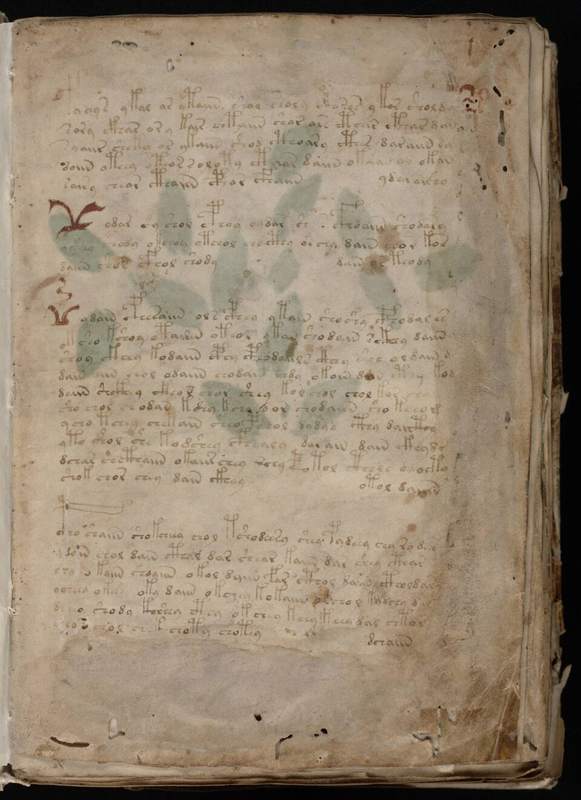
 The Voynich manuscript. About 240 pages in a script nobody reads, with drawings of plants that don't quite exist. Its vellum has been carbon-dated to the early 15th century (1404–1438). Held at Yale's Beinecke Library since 1969. (Beinecke Library, Yale, public domain)
Kryptos. A sculpture by Jim Sanborn, dedicated in 1990 at CIA headquarters in Langley, Virginia. Four encrypted sections. Most use a Vigenère cipher with an alphabet keyed on the sculpture's own name, KRYPTOS. Three were solved. The fourth, K4, has never been publicly solved; its plaintext turned up privately in Smithsonian archives in 2025 and was auctioned. It isn't public. (no photo here; the sculpture is a copyrighted artwork)
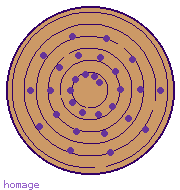 The Phaistos Disc. Fired clay, from Crete, found in 1908 by Luigi Pernier in the Minoan palace at Phaistos, probably 2nd millennium BC. A spiral of stamped signs on both sides, 242 of them, 45 different ones. Pressed with stamps, so in a sense it's printing. Unread. (homage drawing)
Linear A. Minoan writing, used from about 1800 to 1450 BC. Its descendant Linear B was deciphered in the 1950s and turned out to be early Greek. Linear A shares many of the same signs, and you can sound some of them out, but the language underneath still doesn't make sense to anyone.  Someone has tucked a catalogue card in here, marked L.
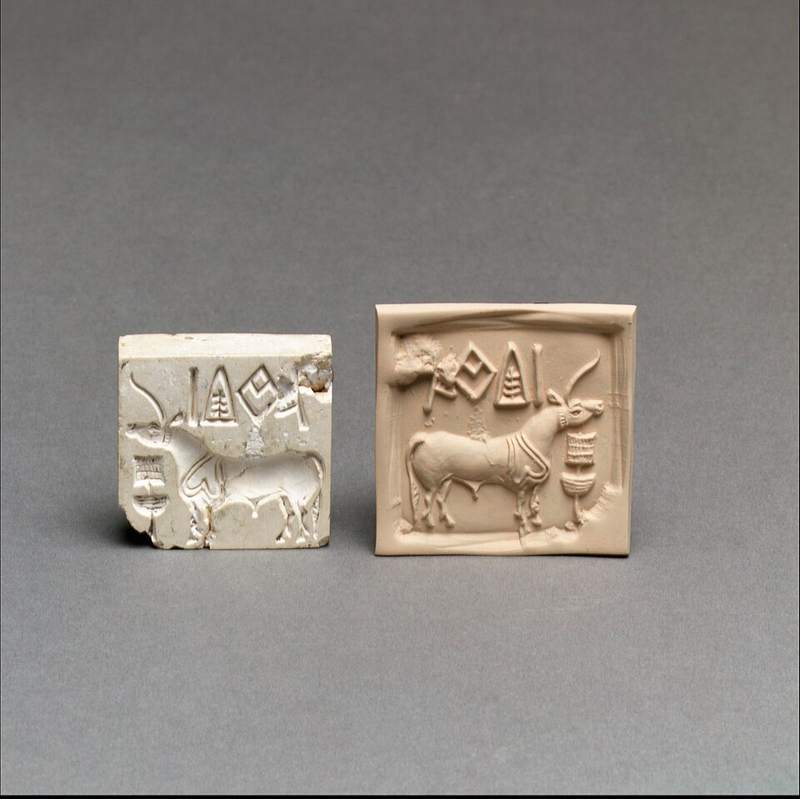
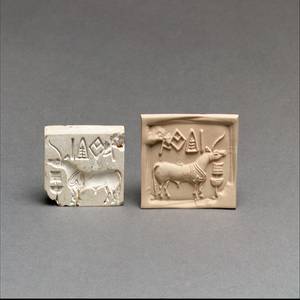 The Indus script. Thousands of short inscriptions, mostly on seals like this one (about 2600–1900 B.C.). No bilingual text has ever been found. Some doubt it's a full writing system at all. (The Metropolitan Museum of Art, CC0)